The NREM Sleep Stage and Why It Matters
Sleep quality is often more important than its length. The NREM sleep stage is key to deep sleep and regeneration during sleep – it is when the body and brain “catch up” the most.
What is the NREM sleep stage?
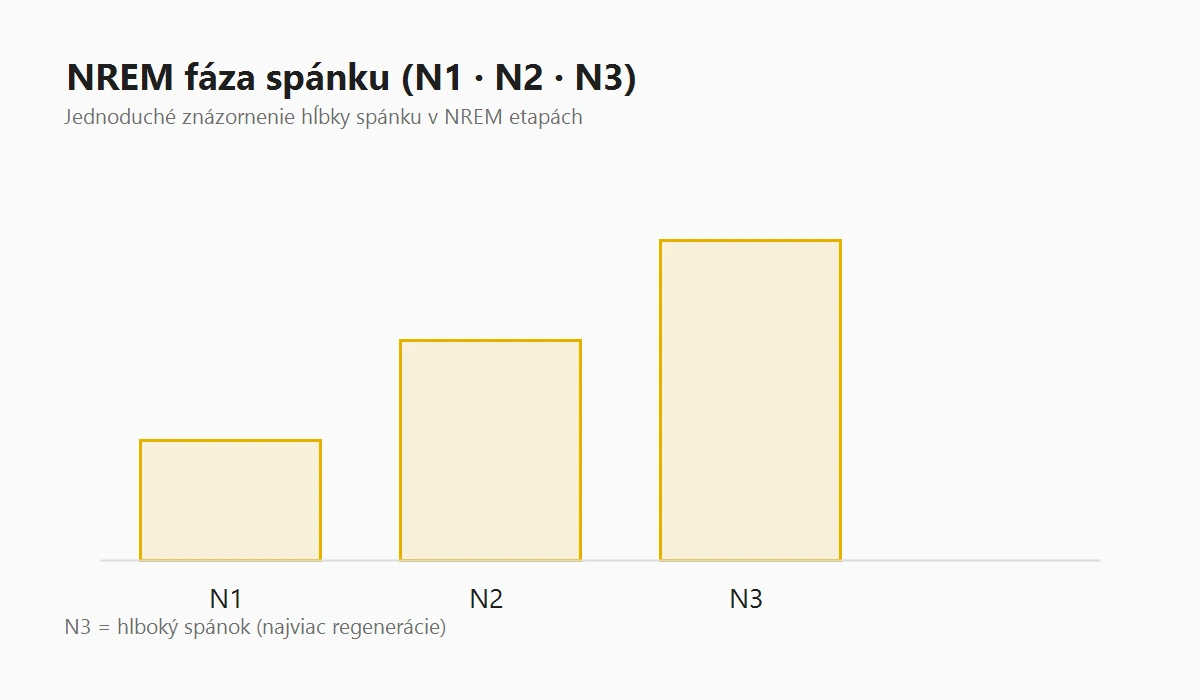
NREM (non-REM) is the part of the sleep cycle that takes place without rapid eye movements. It is typically divided into three simple stages:
Stage N1
The transition between wakefulness and sleep. Sleep is light and a person can be woken easily.
Stage N2
More stable sleep in which the body gradually calms down. For most people it makes up a large part of the night.
Stage N3 (deep sleep)
The deepest stage of NREM. It is associated with the most intensive restoration of the body – often referred to simply as deep sleep.
Why is the NREM stage key?
The NREM sleep stage is important above all because it creates room for deep sleep and natural regenerative processes. In practice, this shows up in several areas:
- Body regeneration: tissue repair, a “reset” of the day’s load, support for the body’s natural balance.
- Brain and memory: sorting and consolidating the information you took in during the day.
- Hormones: processes related to hormonal regulation take place at night.
- Immune system: sleep is important for maintaining resilience and long-term vitality.
What can disrupt NREM sleep?
NREM sleep is sensitive to the conditions in which you fall asleep and sleep. Common factors include:
- stress and overload
- light (especially in the evening and at night)
- noise and repeated awakenings
- the bedroom environment (temperature, air, comfort)
- long-term disruptive influences that reduce sleep stability
It is important to see these neutrally: the more disturbances there are, the harder it is for the body to reach deep sleep.
Why is the sleep environment important?
The body needs stability during the night. Fewer fluctuations and fewer stimuli from the surroundings often mean smoother sleep and more time in the deep stages.

How to support quality sleep?
The practical foundation is simple: create a calm environment and reduce unnecessary influences that disturb you at night. For some people it is mainly light or noise, for others temperature or habits before bed.
EMF exposure is one of the environmental topics people consider alongside other factors. If you are interested in how EMF shielding works, take a look at our technology. Background and expert sources can also be found in the section on scientific studies.
Create an environment for quality sleep
If you want to support deep sleep and regeneration during sleep, start with the environment. Explore our solution or return to the homepage to get oriented in the topic.